
Search
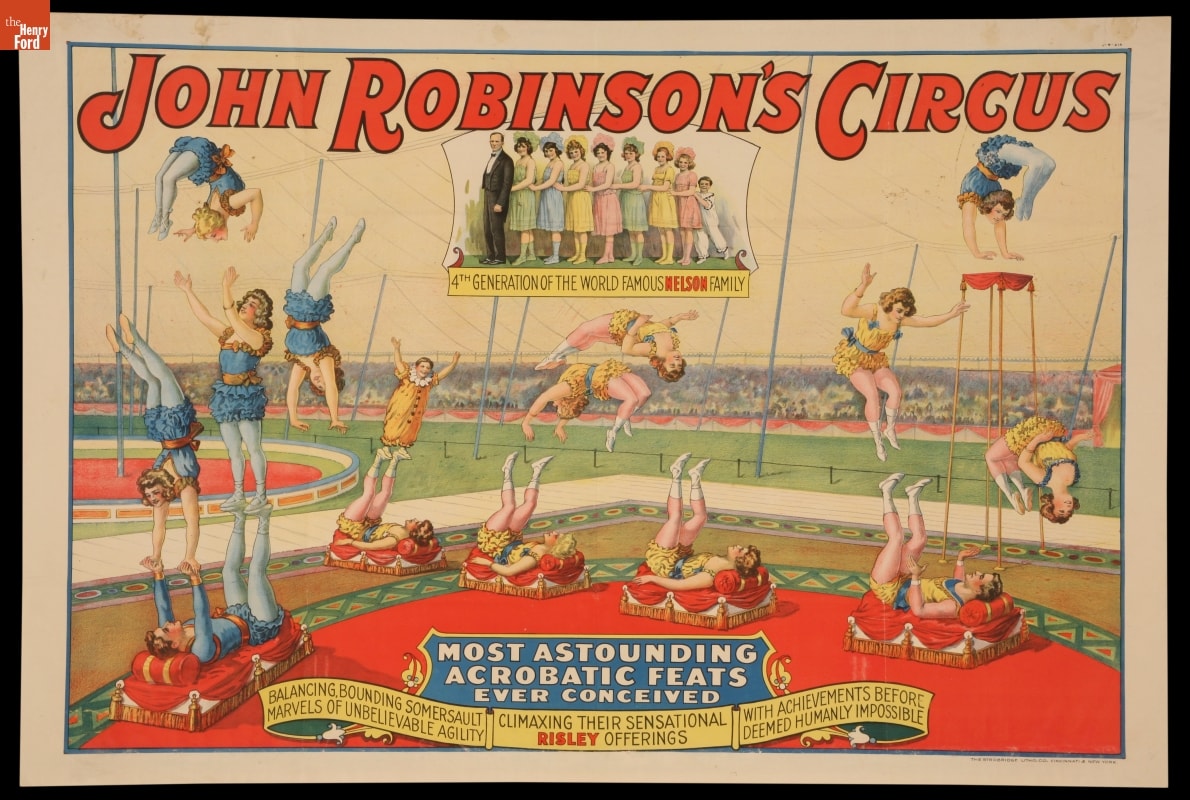
- Circus Poster, "John Robinson's Circus," circa 1925 - In the late nineteenth century, printers developed a lithograph method that produced brightly colored posters. In advance of a circus coming to town, general agents glued these eye-catching generic posters to building walls, fences, and in window displays. To announce when and where the performances would happen, local printers sometimes provided letterpress paper date strips to paste onto the posters' lower margin.
- circa 1925
- Collections - Artifact
Circus Poster, "John Robinson's Circus," circa 1925
In the late nineteenth century, printers developed a lithograph method that produced brightly colored posters. In advance of a circus coming to town, general agents glued these eye-catching generic posters to building walls, fences, and in window displays. To announce when and where the performances would happen, local printers sometimes provided letterpress paper date strips to paste onto the posters' lower margin.
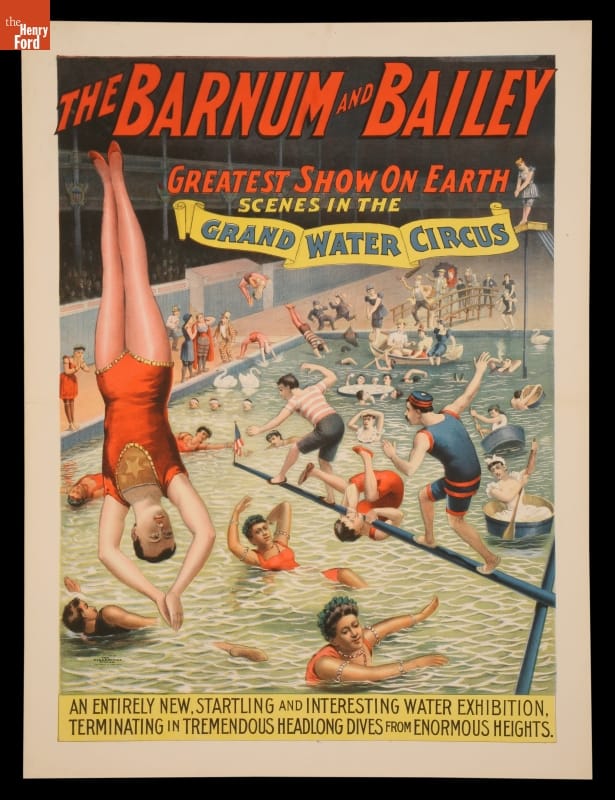
- Circus Poster, Barnum and Bailey Circus Presents "Scenes in the Grand Water Circus," 1895 - In the late nineteenth century, printers developed a lithograph method that produced brightly colored posters. In advance of a circus coming to town, general agents glued these eye-catching generic posters to building walls, fences, and in window displays. To announce when and where the performances would happen, local printers sometimes provided letterpress paper date strips to paste onto the posters' lower margin.
- 1895
- Collections - Artifact
Circus Poster, Barnum and Bailey Circus Presents "Scenes in the Grand Water Circus," 1895
In the late nineteenth century, printers developed a lithograph method that produced brightly colored posters. In advance of a circus coming to town, general agents glued these eye-catching generic posters to building walls, fences, and in window displays. To announce when and where the performances would happen, local printers sometimes provided letterpress paper date strips to paste onto the posters' lower margin.
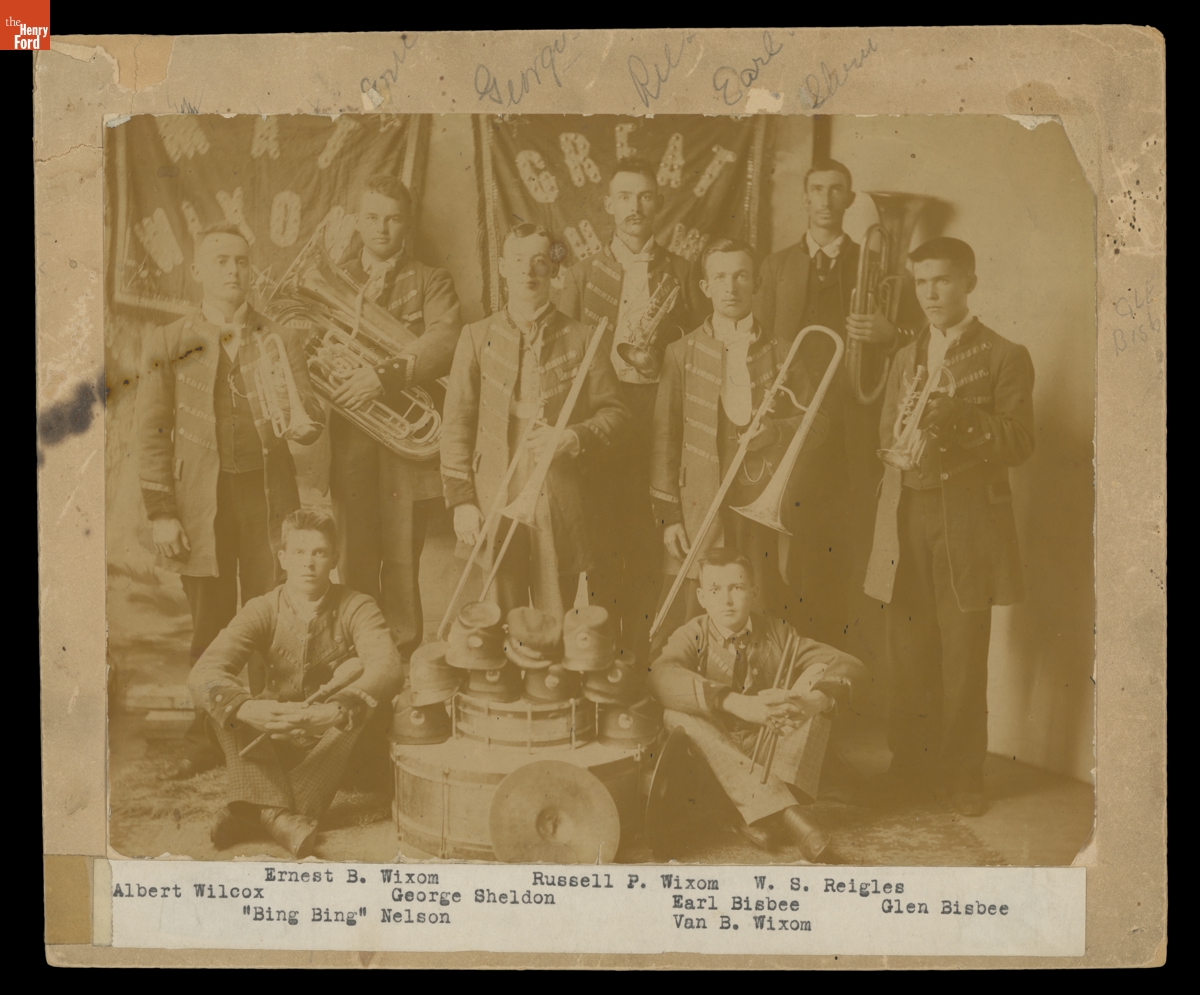
- Wixom Circus, 1892 - Martin Van Buren "Mat" Wixom, and his sons--Frank, Russel, Ernie, and Van--were Michigan-based showmen. They operated a small, regional circus that traveled to mid-Michigan's rural communities between 1874 and 1908. Beginning in 1881, the Wixoms would create a new gimmick or theme and change the roster of performers yearly for the circus to fuel the audience's anticipation.
- 1892
- Collections - Artifact
Wixom Circus, 1892
Martin Van Buren "Mat" Wixom, and his sons--Frank, Russel, Ernie, and Van--were Michigan-based showmen. They operated a small, regional circus that traveled to mid-Michigan's rural communities between 1874 and 1908. Beginning in 1881, the Wixoms would create a new gimmick or theme and change the roster of performers yearly for the circus to fuel the audience's anticipation.
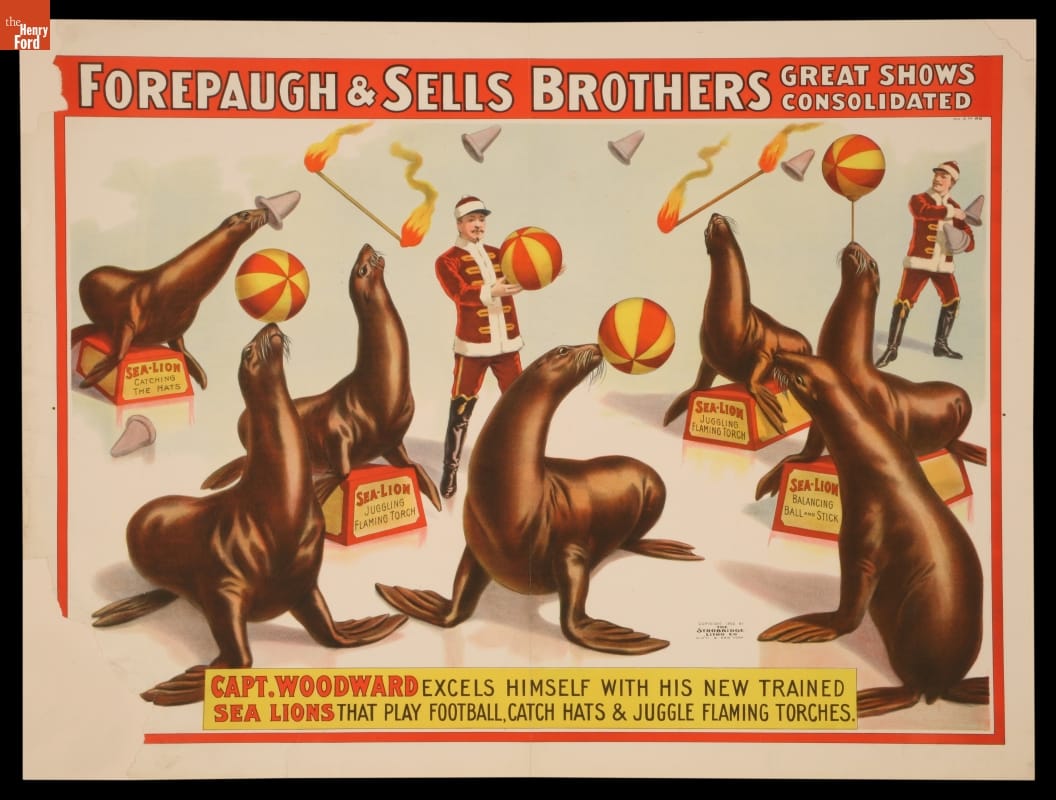
- Circus Poster, "Forepaugh & Sells Brothers Circus Great Shows Consolidated," 1900 - In the late nineteenth century, printers developed a lithograph method that produced brightly colored posters. In advance of a circus coming to town, general agents glued these eye-catching generic posters to building walls, fences, and in window displays. To announce when and where the performances would happen, local printers sometimes provided letterpress paper date strips to paste onto the posters' lower margin.
- 1900
- Collections - Artifact
Circus Poster, "Forepaugh & Sells Brothers Circus Great Shows Consolidated," 1900
In the late nineteenth century, printers developed a lithograph method that produced brightly colored posters. In advance of a circus coming to town, general agents glued these eye-catching generic posters to building walls, fences, and in window displays. To announce when and where the performances would happen, local printers sometimes provided letterpress paper date strips to paste onto the posters' lower margin.
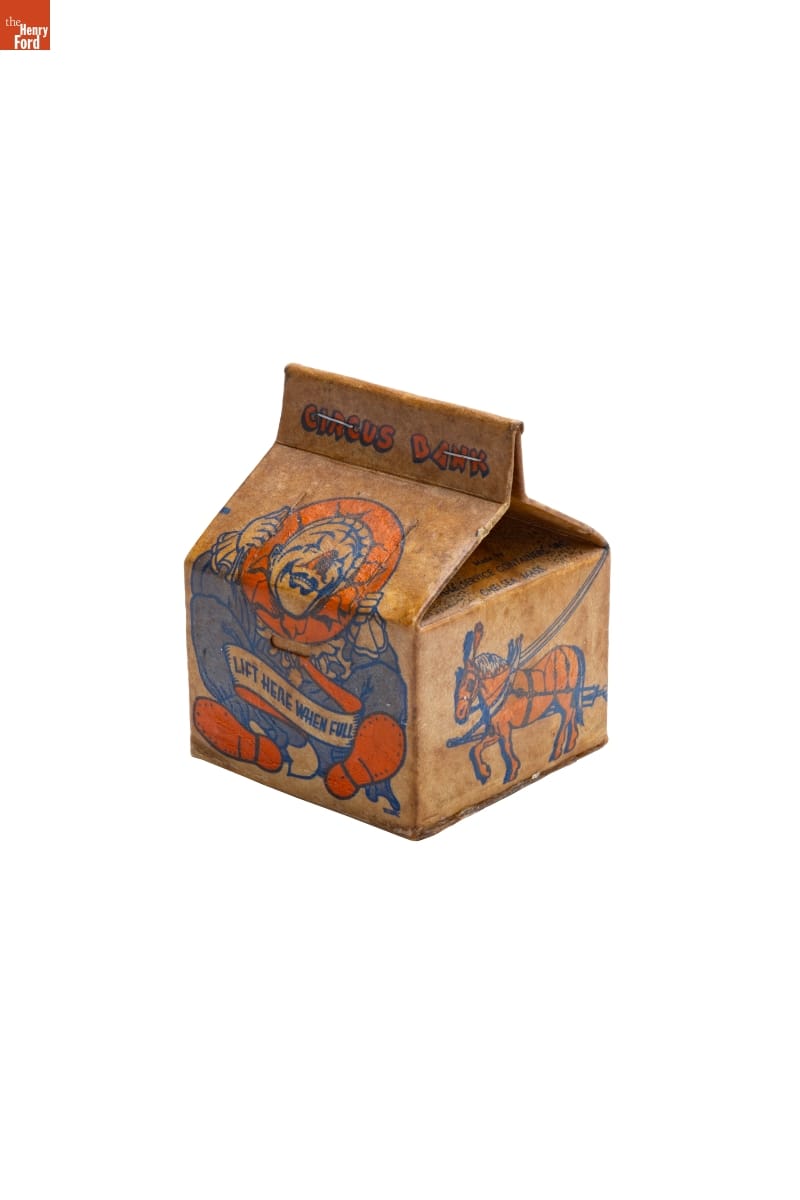
- Circus Bank Milk Carton -
- Collections - Artifact
Circus Bank Milk Carton
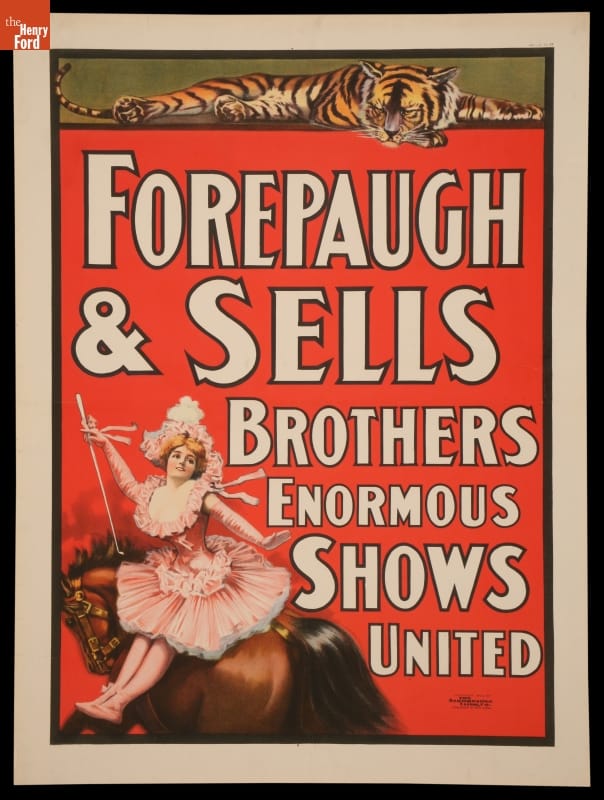
- Circus Poster, "Forepaugh & Sells Brothers Circus Enormous Shows United," 1902 - In the late nineteenth century, printers developed a lithograph method that produced brightly colored posters. In advance of a circus coming to town, general agents glued these eye-catching generic posters to building walls, fences, and in window displays. To announce when and where the performances would happen, local printers sometimes provided letterpress paper date strips to paste onto the posters' lower margin.
- 1902
- Collections - Artifact
Circus Poster, "Forepaugh & Sells Brothers Circus Enormous Shows United," 1902
In the late nineteenth century, printers developed a lithograph method that produced brightly colored posters. In advance of a circus coming to town, general agents glued these eye-catching generic posters to building walls, fences, and in window displays. To announce when and where the performances would happen, local printers sometimes provided letterpress paper date strips to paste onto the posters' lower margin.
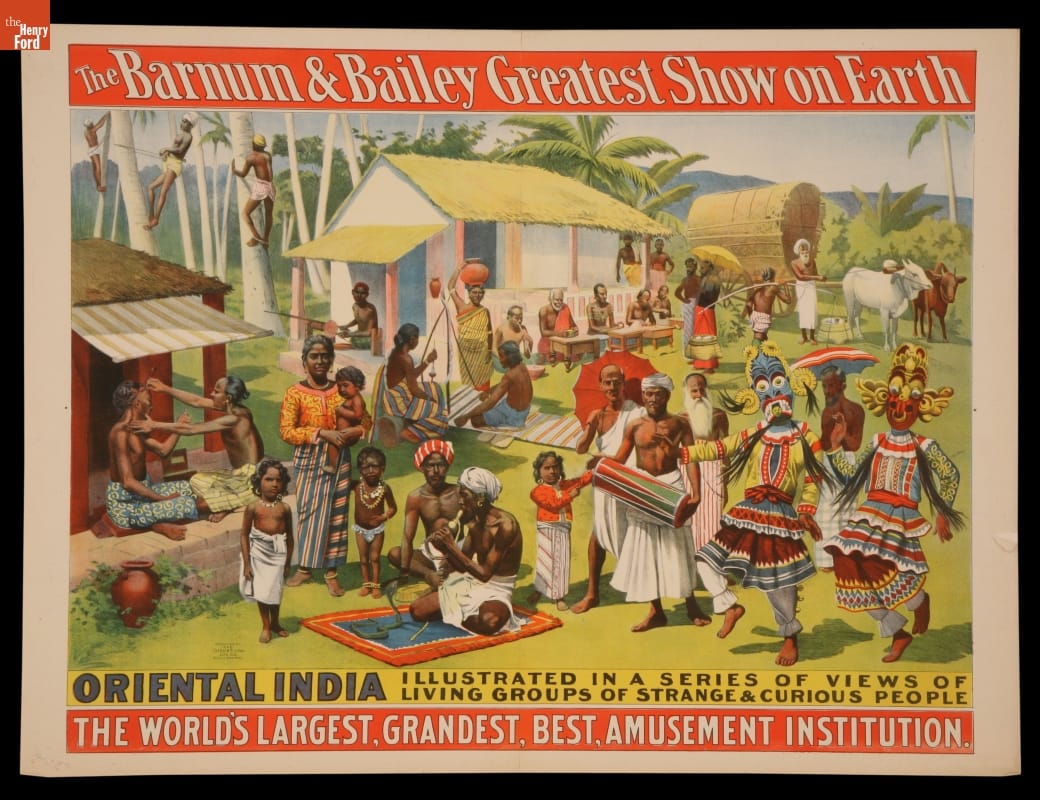
- Circus Poster, Barnum and Bailey Circus Presents: "Oriental India," 1896 - In the late nineteenth century, printers developed a lithograph method that produced brightly colored posters. In advance of a circus coming to town, general agents glued these eye-catching generic posters to building walls, fences, and in window displays. To announce when and where the performances would happen, local printers sometimes provided letterpress paper date strips to paste onto the posters' lower margin.
- 1896
- Collections - Artifact
Circus Poster, Barnum and Bailey Circus Presents: "Oriental India," 1896
In the late nineteenth century, printers developed a lithograph method that produced brightly colored posters. In advance of a circus coming to town, general agents glued these eye-catching generic posters to building walls, fences, and in window displays. To announce when and where the performances would happen, local printers sometimes provided letterpress paper date strips to paste onto the posters' lower margin.
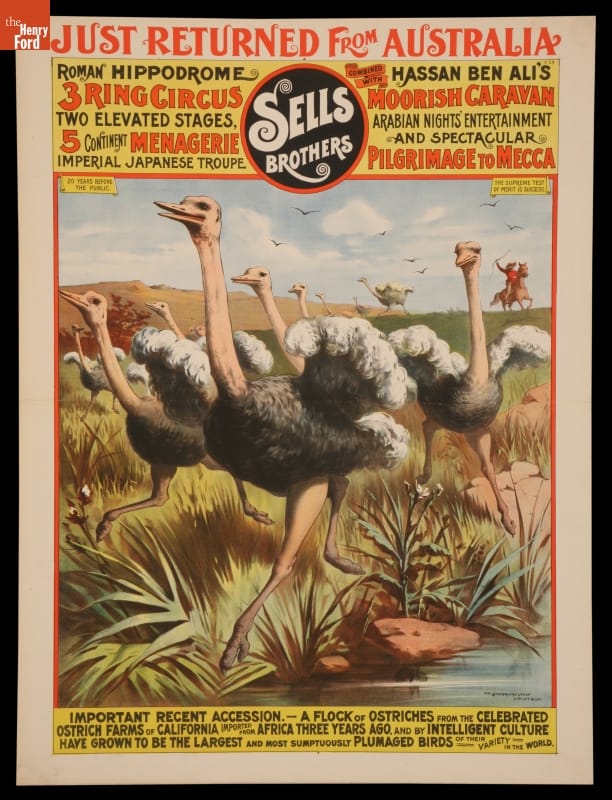
- Circus Poster, Sells Brothers Circus: "Just Returned From Australia," circa 1892 - In the late nineteenth century, printers developed a lithograph method that produced brightly colored posters. In advance of a circus coming to town, general agents glued these eye-catching generic posters to building walls, fences, and in window displays. To announce when and where the performances would happen, local printers sometimes provided letterpress paper date strips to paste onto the posters' lower margin.
- circa 1892
- Collections - Artifact
Circus Poster, Sells Brothers Circus: "Just Returned From Australia," circa 1892
In the late nineteenth century, printers developed a lithograph method that produced brightly colored posters. In advance of a circus coming to town, general agents glued these eye-catching generic posters to building walls, fences, and in window displays. To announce when and where the performances would happen, local printers sometimes provided letterpress paper date strips to paste onto the posters' lower margin.
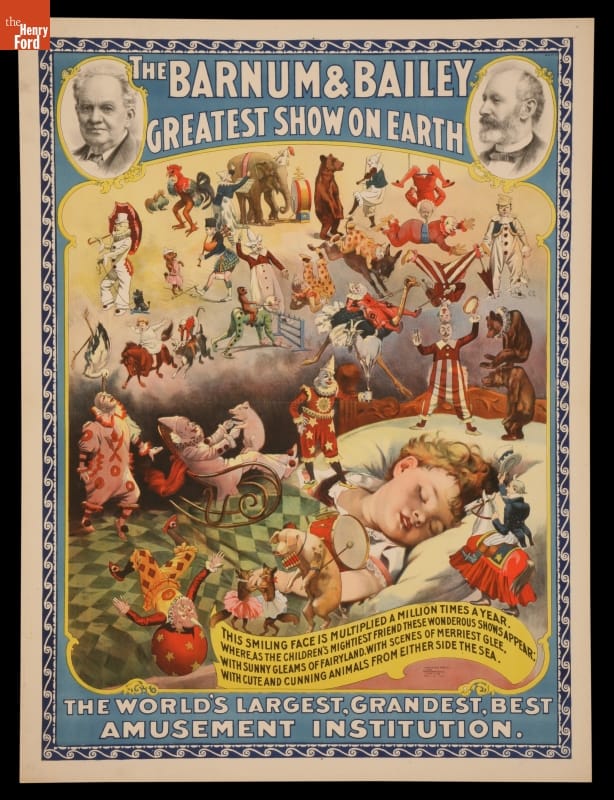
- Circus Poster, Barnum & Bailey, A Child Dreaming of a Circus, 1896 - In the late nineteenth century, printers developed a lithograph method that produced brightly colored posters. In advance of a circus coming to town, general agents glued these eye-catching generic posters to building walls, fences, and in window displays. To announce when and where the performances would happen, local printers sometimes provided letterpress paper date strips to paste onto the posters' lower margin.
- 1896
- Collections - Artifact
Circus Poster, Barnum & Bailey, A Child Dreaming of a Circus, 1896
In the late nineteenth century, printers developed a lithograph method that produced brightly colored posters. In advance of a circus coming to town, general agents glued these eye-catching generic posters to building walls, fences, and in window displays. To announce when and where the performances would happen, local printers sometimes provided letterpress paper date strips to paste onto the posters' lower margin.
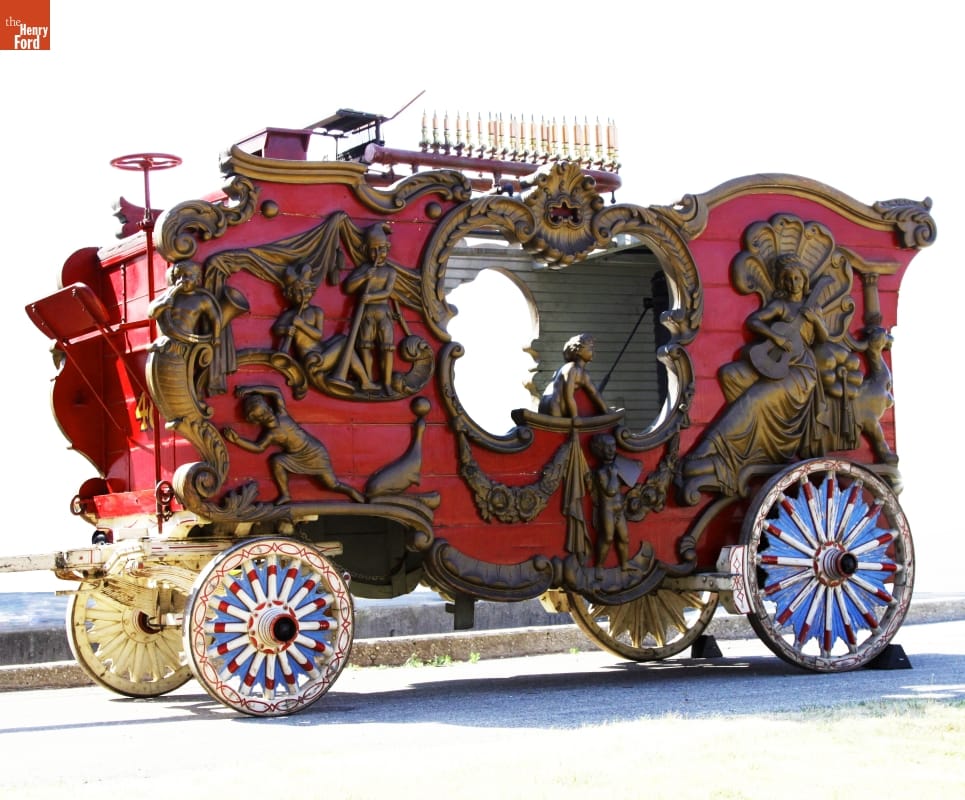
- Calliope Circus Wagon, 1917 - During the late 19th and early 20th centuries, traveling circuses entertained millions of Americans. When a circus arrived in town, it staged a spectacular promotional parade down main street, and the musical steam calliope was a highlight. This calliope was built for the John Robinson Circus of Peru, Indiana, about 1917. Other circuses used it before the calliope's retirement in 1929.
- 1917
- Collections - Artifact
Calliope Circus Wagon, 1917
During the late 19th and early 20th centuries, traveling circuses entertained millions of Americans. When a circus arrived in town, it staged a spectacular promotional parade down main street, and the musical steam calliope was a highlight. This calliope was built for the John Robinson Circus of Peru, Indiana, about 1917. Other circuses used it before the calliope's retirement in 1929.