
Search
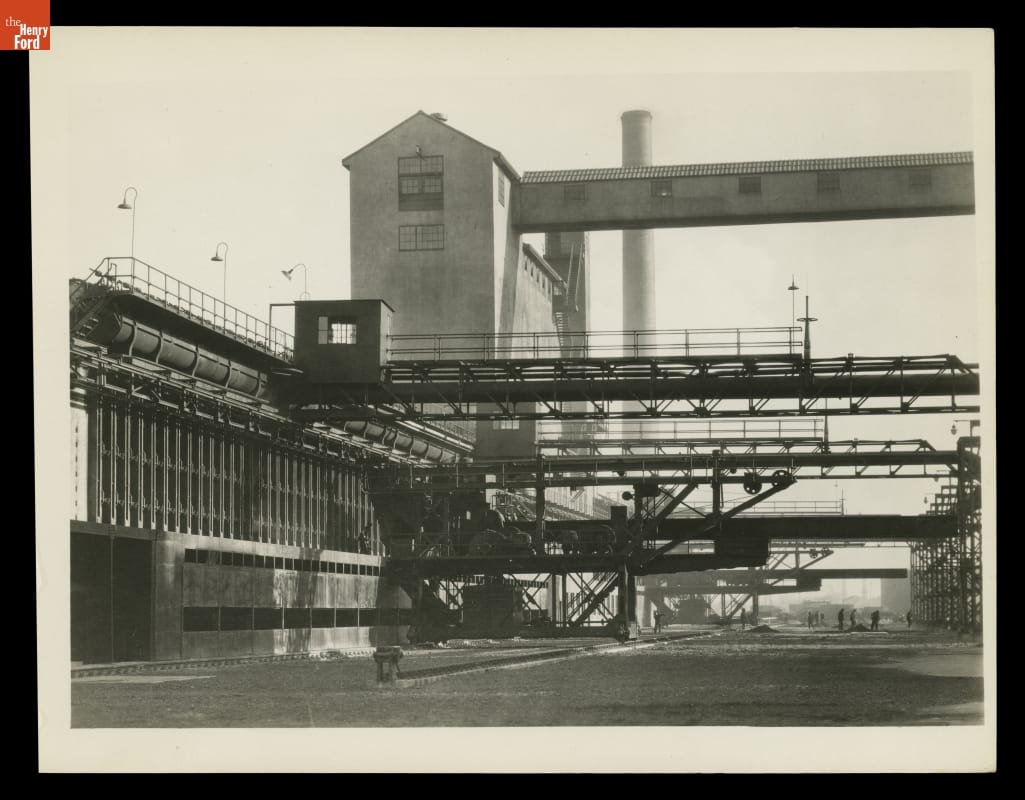
- Ford Motor Company Rouge Plant Coke Ovens, 1927 - Coke ovens at Ford Motor Company's Rouge plant converted coal into high-carbon coke, used in the factory's blast furnaces to produce iron. In 1921, the Rouge's ovens could produce up to 3,600 tons of coke daily. New, more efficient coke ovens opened in 1937. The coking process also produced gas used to heat some of the factory's other furnaces.
- 1927
- Collections - Artifact
Ford Motor Company Rouge Plant Coke Ovens, 1927
Coke ovens at Ford Motor Company's Rouge plant converted coal into high-carbon coke, used in the factory's blast furnaces to produce iron. In 1921, the Rouge's ovens could produce up to 3,600 tons of coke daily. New, more efficient coke ovens opened in 1937. The coking process also produced gas used to heat some of the factory's other furnaces.
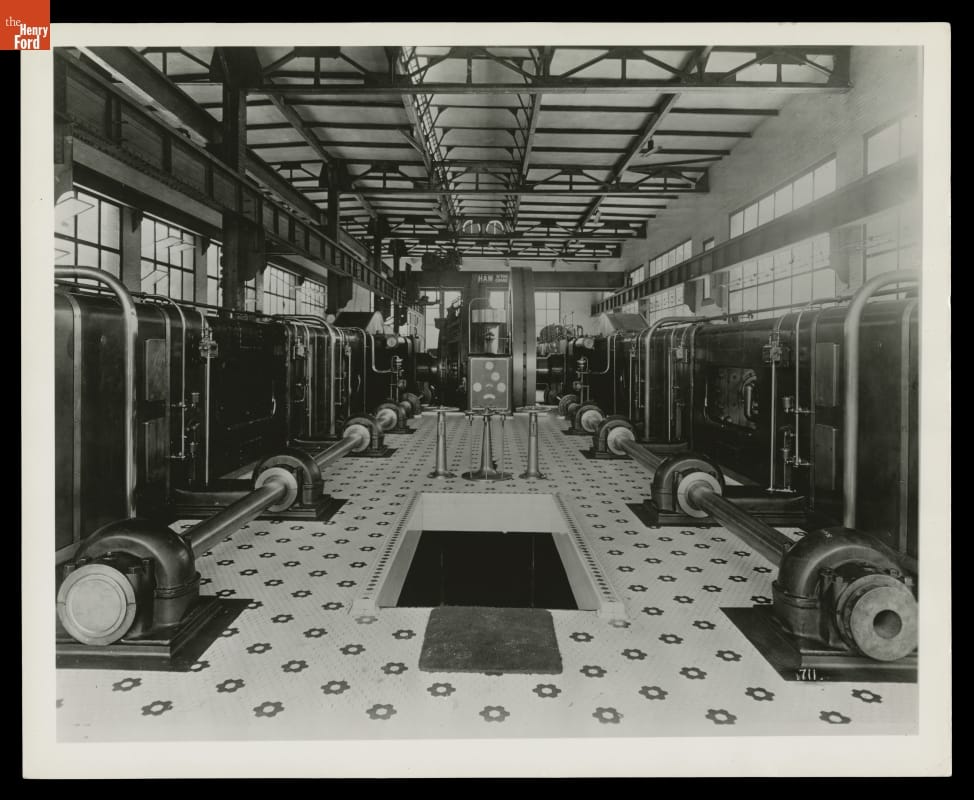
- Powerhouse, Highland Park Plant, Michigan, circa 1914 - One of the nine gas-steam engines installed in Ford Motor Company's Highland Park powerhouse is shown in this 1914 view. Each of these hybrid machines consisted of a gas engine and a steam engine both connected to a single electrical generator. Henry Ford took great pride in the engines, though their hybrid arrangement was not widely adopted elsewhere.
- circa 1914
- Collections - Artifact
Powerhouse, Highland Park Plant, Michigan, circa 1914
One of the nine gas-steam engines installed in Ford Motor Company's Highland Park powerhouse is shown in this 1914 view. Each of these hybrid machines consisted of a gas engine and a steam engine both connected to a single electrical generator. Henry Ford took great pride in the engines, though their hybrid arrangement was not widely adopted elsewhere.
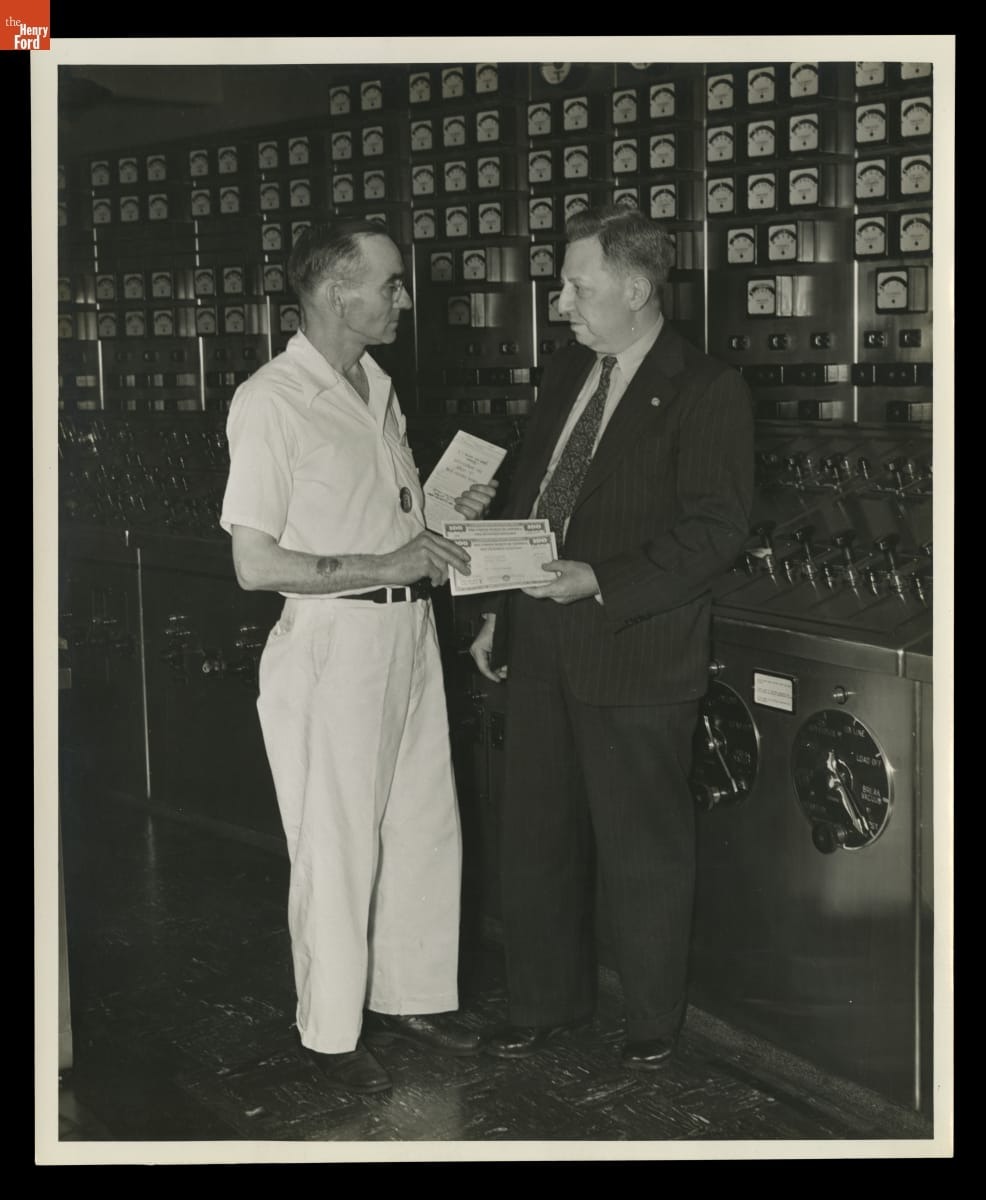
- War Bond Drive at Ford Motor Company Rouge Plant Powerhouse #1, June 1945 - Ford Motor Company and its employees contributed to Allied efforts in World War II in numerous ways. The company built trucks, tanks, aircraft engines, gliders, and B-24 bomber airplanes. Ford workers purchased war bonds with their earnings, either independently or through a payroll deduction program.
- June 18, 1945
- Collections - Artifact
War Bond Drive at Ford Motor Company Rouge Plant Powerhouse #1, June 1945
Ford Motor Company and its employees contributed to Allied efforts in World War II in numerous ways. The company built trucks, tanks, aircraft engines, gliders, and B-24 bomber airplanes. Ford workers purchased war bonds with their earnings, either independently or through a payroll deduction program.
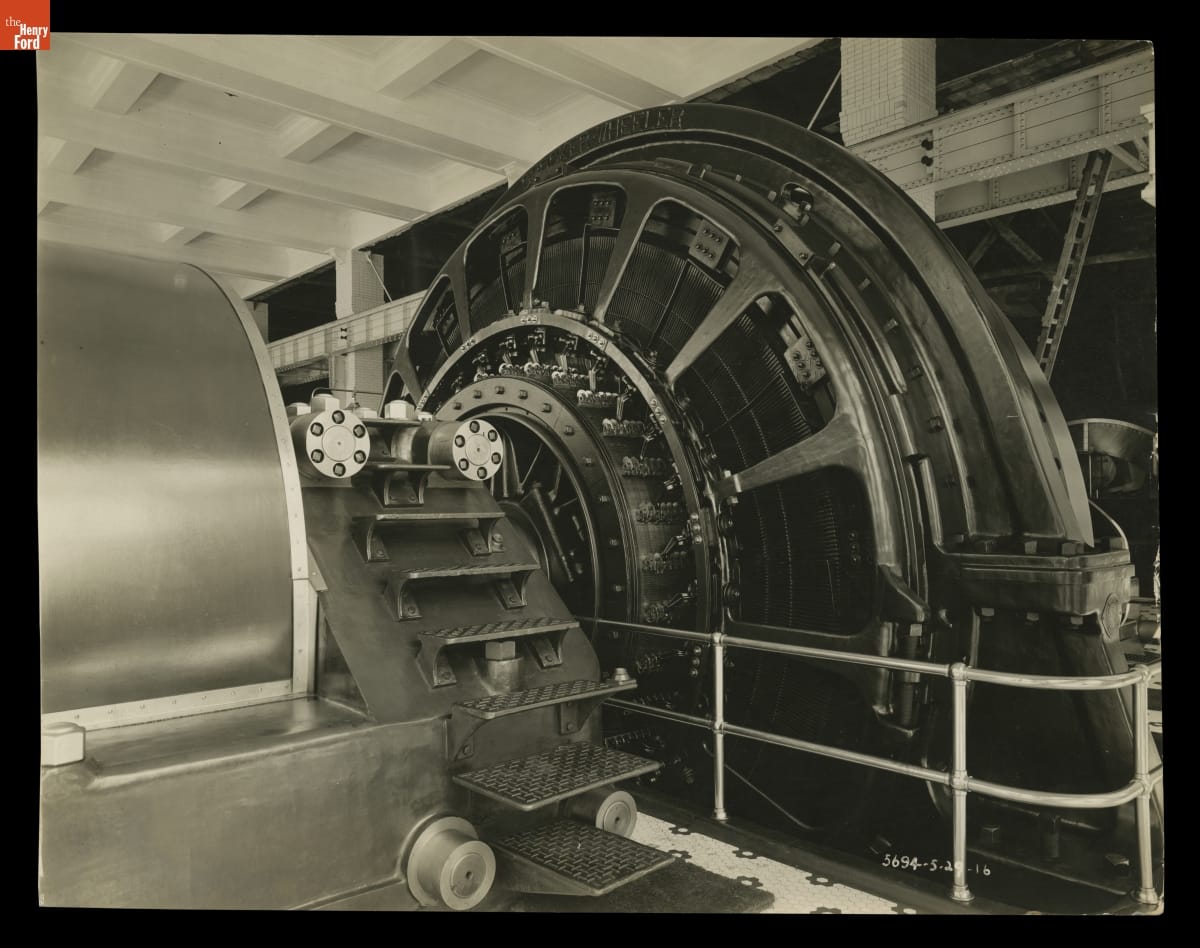
- Gas-Steam Engine at the Ford Motor Company Highland Park Plant Powerhouse, May 1916 - Ford Motor Company opened its Highland Park plant in 1910. It was here that Ford produced most of its 15 million Model T cars, developed its moving assembly line, and instituted its Five Dollar Day. The plant's electricity was supplied by an on-site powerhouse with generators connected to nine gas-steam hybrid engines. Together, the nine engines produced 53,000 horsepower.
- May 29, 1916
- Collections - Artifact
Gas-Steam Engine at the Ford Motor Company Highland Park Plant Powerhouse, May 1916
Ford Motor Company opened its Highland Park plant in 1910. It was here that Ford produced most of its 15 million Model T cars, developed its moving assembly line, and instituted its Five Dollar Day. The plant's electricity was supplied by an on-site powerhouse with generators connected to nine gas-steam hybrid engines. Together, the nine engines produced 53,000 horsepower.
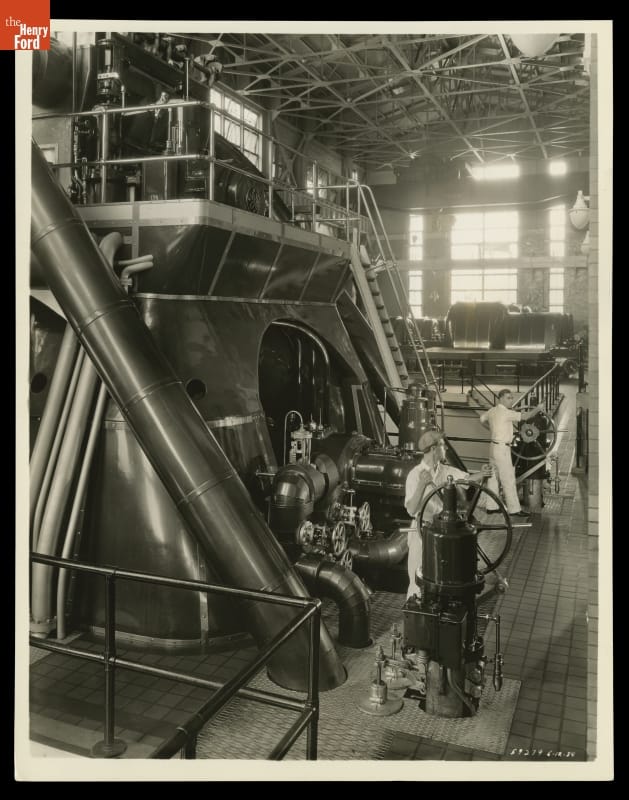
- Operating a 100,000 Kilowatt Turbo-Generator at the Ford Rouge Plant Main Powerhouse, June 1934 - The powerhouse at Ford Motor Company's Rouge factory was readily identified by its eight tall smokestacks. Steam turbines, fueled by pulverized coal, generated electricity for the massive Rouge complex -- and for Ford's Highland Park and Flat Rock plants, and for Lincoln's Detroit plant. The Rouge sometimes generated surplus power that could be sold to Detroit Edison Company.
- June 12, 1934
- Collections - Artifact
Operating a 100,000 Kilowatt Turbo-Generator at the Ford Rouge Plant Main Powerhouse, June 1934
The powerhouse at Ford Motor Company's Rouge factory was readily identified by its eight tall smokestacks. Steam turbines, fueled by pulverized coal, generated electricity for the massive Rouge complex -- and for Ford's Highland Park and Flat Rock plants, and for Lincoln's Detroit plant. The Rouge sometimes generated surplus power that could be sold to Detroit Edison Company.
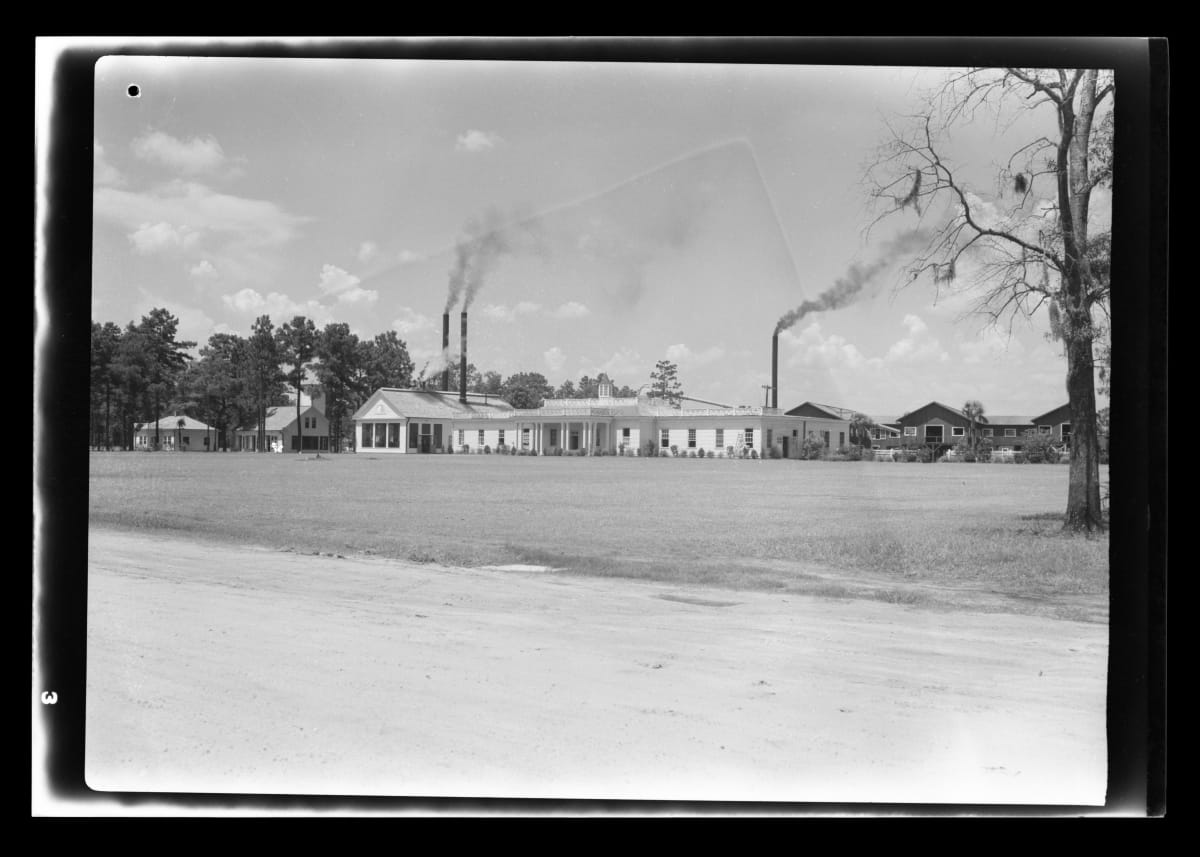
- Power House, Farm Repair Shop, and Sawmill, Richmond Hill, Georgia, July 1940 - Henry Ford purchased vast amounts of land around present-day Richmond Hill, Georgia, beginning in the 1920s. Here, Ford dabbled in agricultural experimentation and in the late 1930s he built a winter residence. Ford also built a number of buildings to support his farming operations and the surrounding community. The sawmill supplied lumber from many of the buildings erected around Richmond Hill.
- July 31, 1940
- Collections - Artifact
Power House, Farm Repair Shop, and Sawmill, Richmond Hill, Georgia, July 1940
Henry Ford purchased vast amounts of land around present-day Richmond Hill, Georgia, beginning in the 1920s. Here, Ford dabbled in agricultural experimentation and in the late 1930s he built a winter residence. Ford also built a number of buildings to support his farming operations and the surrounding community. The sawmill supplied lumber from many of the buildings erected around Richmond Hill.
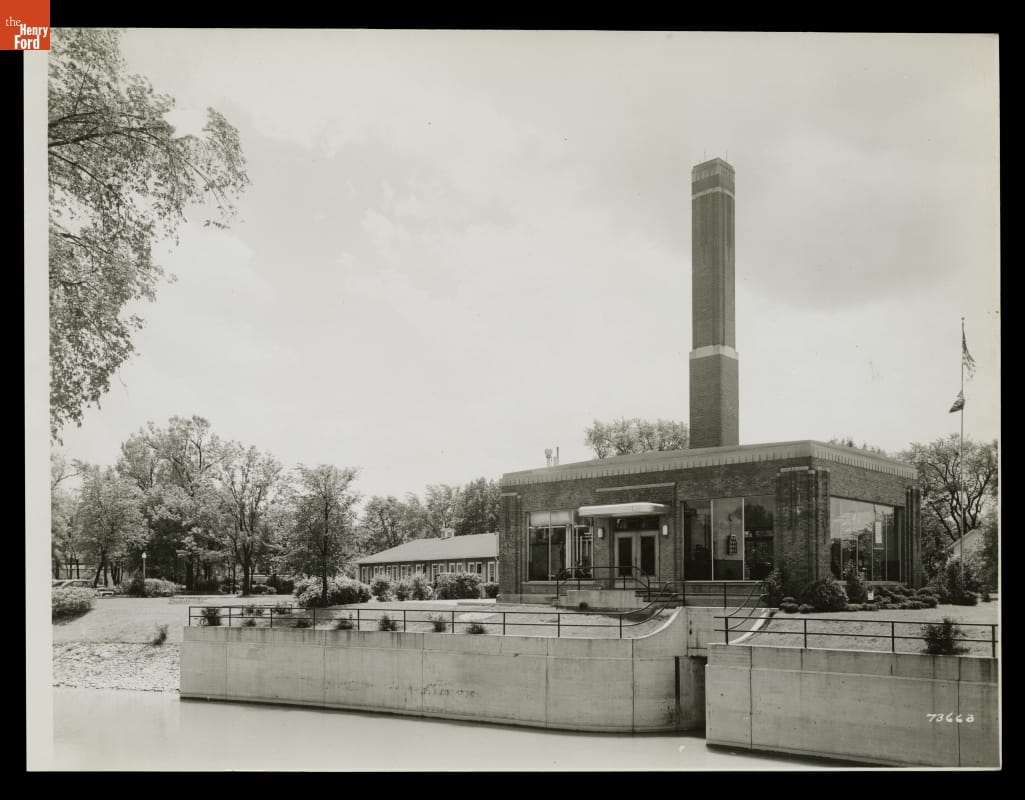
- Ford Motor Company Powerhouse, Milan, Michigan, June 1945 - In the early 1920s, Henry Ford began locating small hydroelectrically powered plants in rural southeast Michigan. These "Village Industries" employed local people who could maintain farms while working at the factory. The plant in Milan operated from 1938 until 1947. Workers there made ignition coils and ammeters for Ford Motor Company vehicles.
- June 14, 1945
- Collections - Artifact
Ford Motor Company Powerhouse, Milan, Michigan, June 1945
In the early 1920s, Henry Ford began locating small hydroelectrically powered plants in rural southeast Michigan. These "Village Industries" employed local people who could maintain farms while working at the factory. The plant in Milan operated from 1938 until 1947. Workers there made ignition coils and ammeters for Ford Motor Company vehicles.
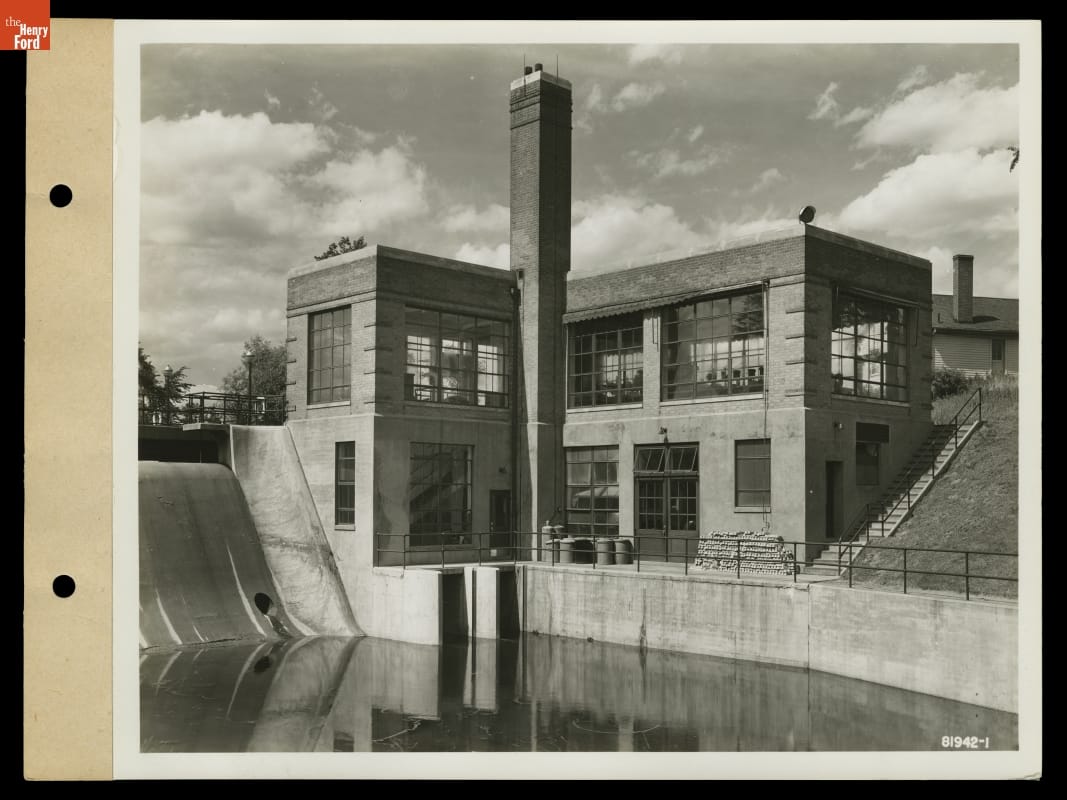
- Willow Run Ford Village Industry Plant, July 1945 - In the 1920s and '30s, Henry Ford located small hydroelectrically powered factories throughout rural southeast Michigan. Built in 1939, the Willow Run plant differed from other "Village Industries." Instead of local residents, boys from Ford's nearby Camp Willow Run -- which provided income and life-skills training for underprivileged teenagers -- worked here, supplying door and ignition locks and keys for Ford's passenger cars.
- July 11, 1945
- Collections - Artifact
Willow Run Ford Village Industry Plant, July 1945
In the 1920s and '30s, Henry Ford located small hydroelectrically powered factories throughout rural southeast Michigan. Built in 1939, the Willow Run plant differed from other "Village Industries." Instead of local residents, boys from Ford's nearby Camp Willow Run -- which provided income and life-skills training for underprivileged teenagers -- worked here, supplying door and ignition locks and keys for Ford's passenger cars.
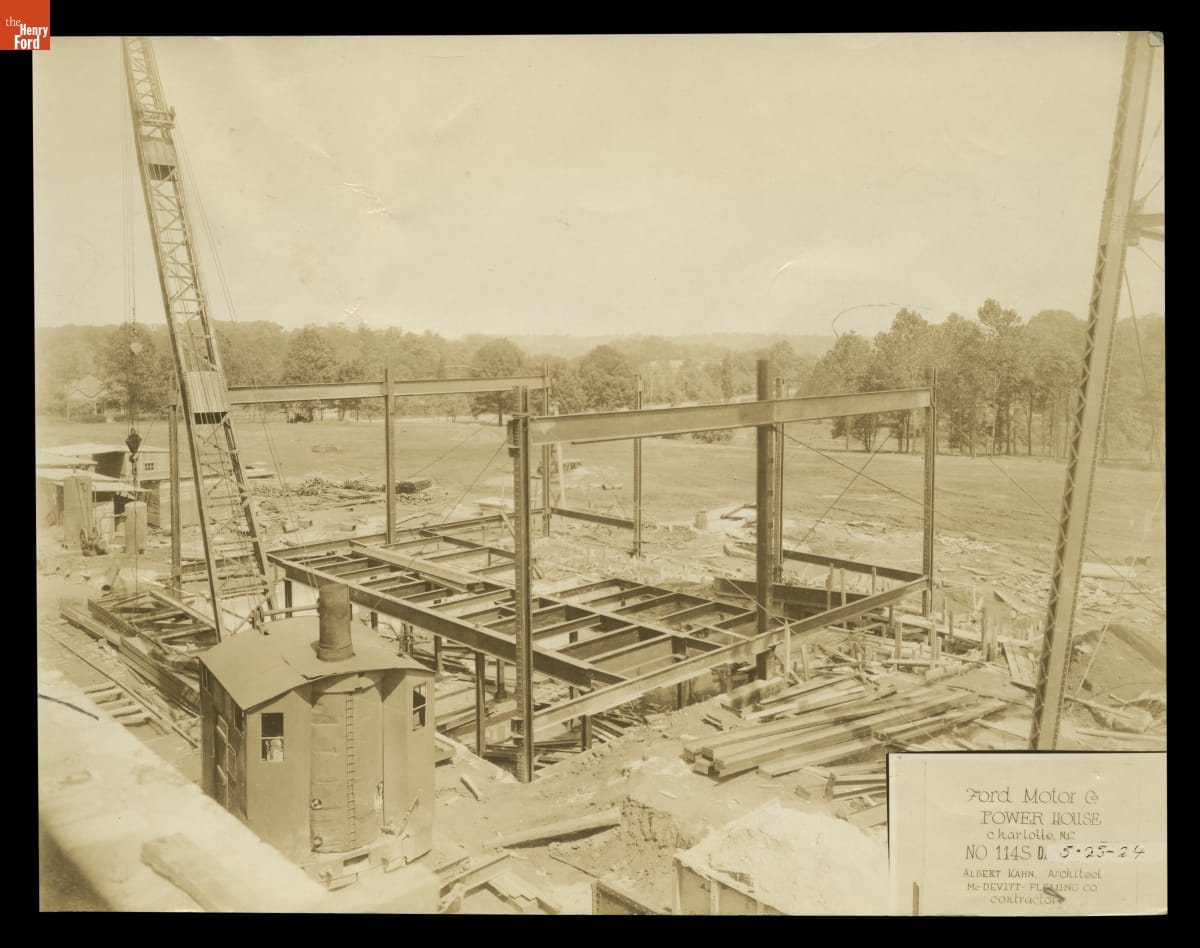
- Construction Progress, Power House at Ford Motor Company Assembly Plant, Charlotte, North Carolina, May 1924 - Starting in the early 1910s, Ford Motor Company opened domestic assembly plants throughout the United States. Assembling automobiles closer to regional markets reduced shipping costs -- parts were cheaper to ship than completed automobiles. Ford established a branch in Charlotte, North Carolina, in 1914. Ten years later the company built a modern one-story assembly plant designed by Albert Kahn. Automobile assembly ceased at this plant in 1933.
- May 25, 1924
- Collections - Artifact
Construction Progress, Power House at Ford Motor Company Assembly Plant, Charlotte, North Carolina, May 1924
Starting in the early 1910s, Ford Motor Company opened domestic assembly plants throughout the United States. Assembling automobiles closer to regional markets reduced shipping costs -- parts were cheaper to ship than completed automobiles. Ford established a branch in Charlotte, North Carolina, in 1914. Ten years later the company built a modern one-story assembly plant designed by Albert Kahn. Automobile assembly ceased at this plant in 1933.
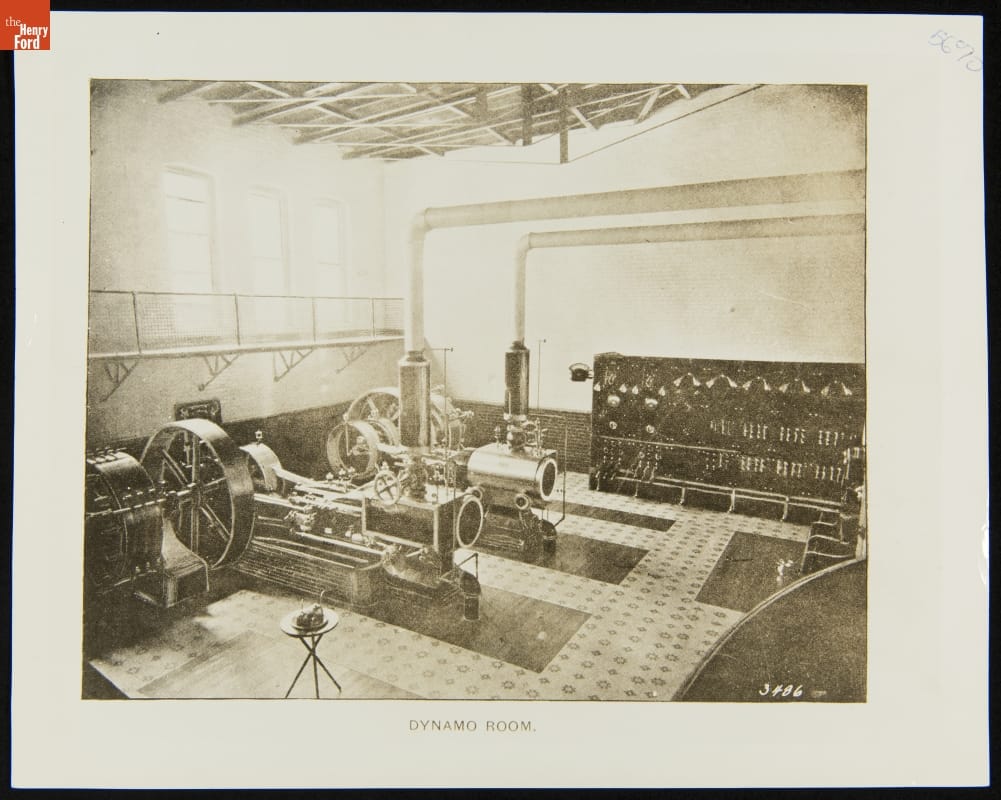
- Pontiac State Hospital Dynamo Room, Pontiac, Michigan, 1898 - In 1898, a modern electric light and power plant was completed at the Eastern Michigan Asylum in Pontiac. Inside, dynamos, motors, machines, and a range of switches and meters helped power the institution's growing infrastructure. This photograph shows the interior of the dynamo room. Hospital administrators funded a new power plant in 1929.
- 1898
- Collections - Artifact
Pontiac State Hospital Dynamo Room, Pontiac, Michigan, 1898
In 1898, a modern electric light and power plant was completed at the Eastern Michigan Asylum in Pontiac. Inside, dynamos, motors, machines, and a range of switches and meters helped power the institution's growing infrastructure. This photograph shows the interior of the dynamo room. Hospital administrators funded a new power plant in 1929.