
Search
- Stereograph, "Meteor in Constellation of Orion," 1904 - Americans loved stereographs -- millions were made from the mid-1800s through the 1930s. A stereograph consists of two offset photos that appear to have three-dimensional depth when viewed through a stereoscope. These images entertained and educated. Stereographs could transport viewers to distant events, exotic places, and even worlds beyond, like this image of the Orion constellation.
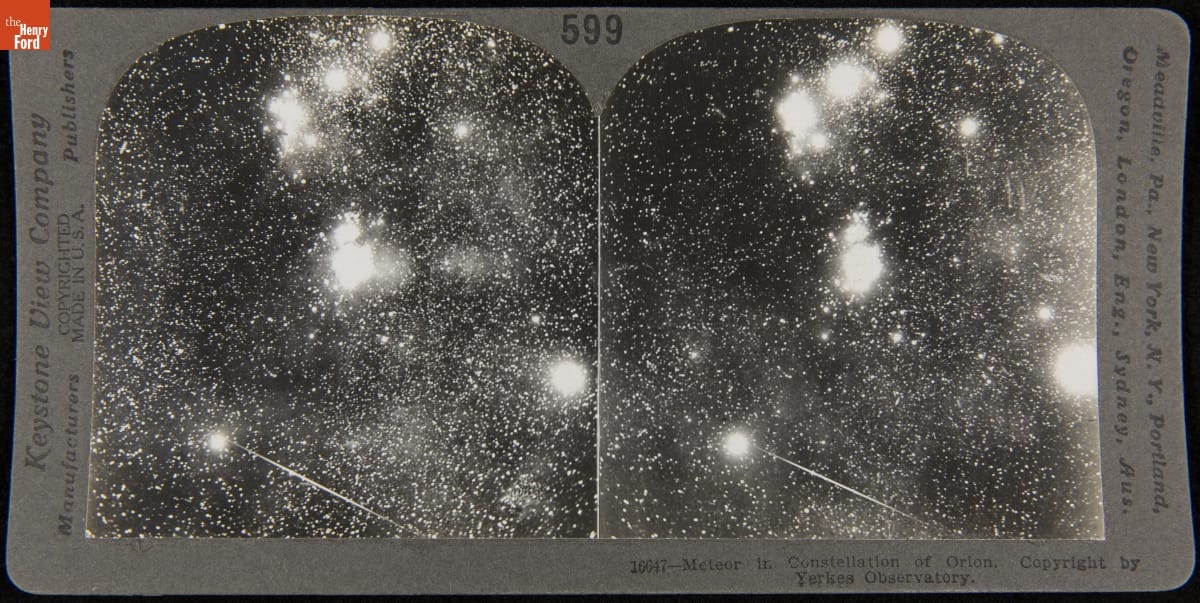
- November 15, 1904
- Collections - Artifact
Stereograph, "Meteor in Constellation of Orion," 1904
Americans loved stereographs -- millions were made from the mid-1800s through the 1930s. A stereograph consists of two offset photos that appear to have three-dimensional depth when viewed through a stereoscope. These images entertained and educated. Stereographs could transport viewers to distant events, exotic places, and even worlds beyond, like this image of the Orion constellation.
- Motor Controller Used at the Yerkes Observatory, Williams Bay, Wisconsin, circa 1897 - Yerkes Observatory in Williams Bay, Wisconsin is known as the birthplace of modern physics for the volume and importance of research conducted there. It is also home to the world's largest refracting telescope. When it opened in 1897, the observatory included an adjustable floor and a rotating dome, governed by motor controllers made by Chicago-based Cutler-Hammer Manufacturing Company.
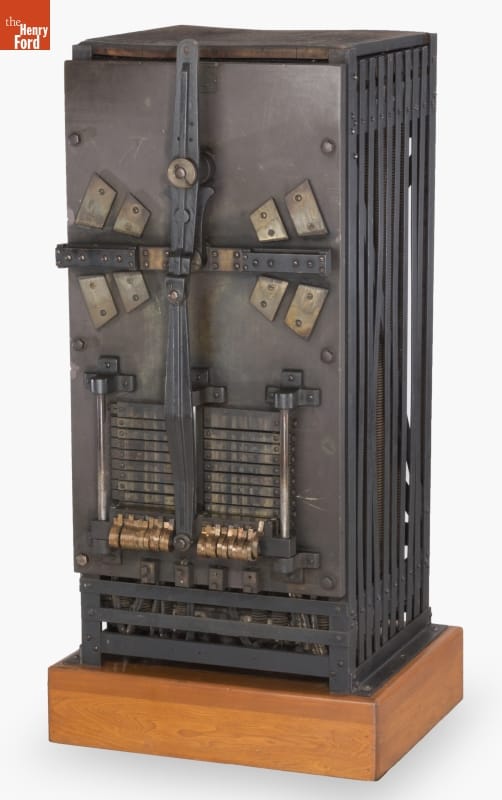
- circa 1897
- Collections - Artifact
Motor Controller Used at the Yerkes Observatory, Williams Bay, Wisconsin, circa 1897
Yerkes Observatory in Williams Bay, Wisconsin is known as the birthplace of modern physics for the volume and importance of research conducted there. It is also home to the world's largest refracting telescope. When it opened in 1897, the observatory included an adjustable floor and a rotating dome, governed by motor controllers made by Chicago-based Cutler-Hammer Manufacturing Company.
- Stereograph, "The Full Moon," 1904-1908 - Americans loved stereographs -- millions were made from the mid-1800s through the 1930s. A stereograph consists of two offset photos that appear to have three-dimensional depth when viewed through a stereoscope. These images entertained and educated. Stereographs could transport viewers to distant events, exotic places, and even worlds beyond, like this image of the Moon--Earth's only natural satellite.
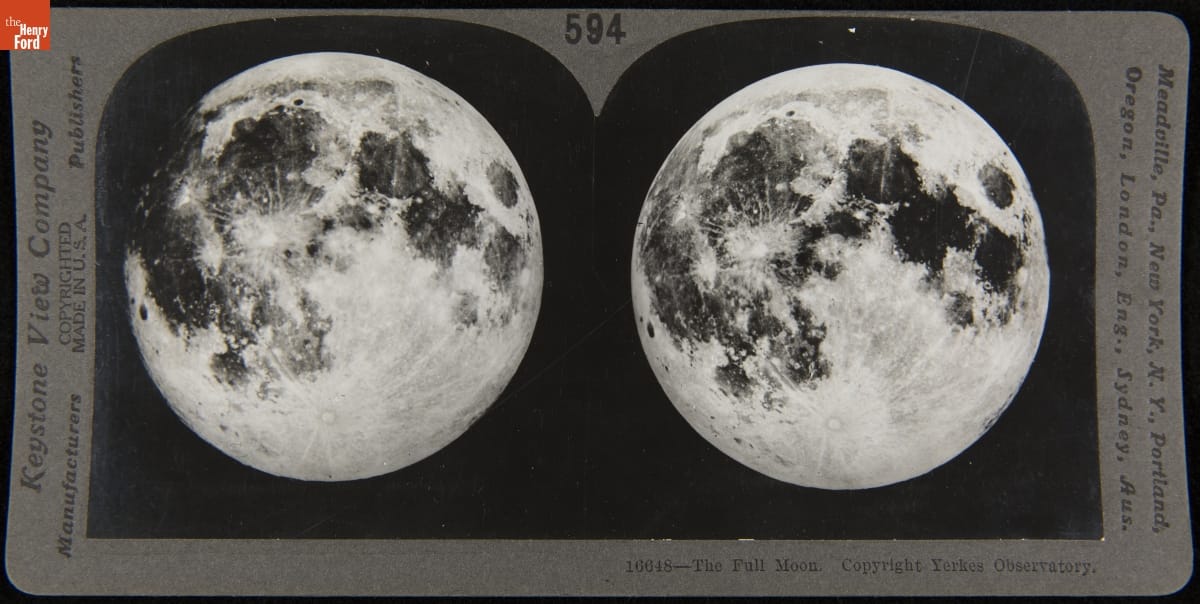
- 1904-1908
- Collections - Artifact
Stereograph, "The Full Moon," 1904-1908
Americans loved stereographs -- millions were made from the mid-1800s through the 1930s. A stereograph consists of two offset photos that appear to have three-dimensional depth when viewed through a stereoscope. These images entertained and educated. Stereographs could transport viewers to distant events, exotic places, and even worlds beyond, like this image of the Moon--Earth's only natural satellite.
- Stereograph, "Morehouse's Comet," 1908 - Americans loved stereographs -- millions were made from the mid-1800s through the 1930s. A stereograph consists of two offset photos that appear to have three-dimensional depth when viewed through a stereoscope. These images entertained and educated. Stereographs could transport viewers to distant events, exotic places, and even worlds beyond, like this image of a comet first seen in 1908 and named for astronomer Daniel Morehouse.
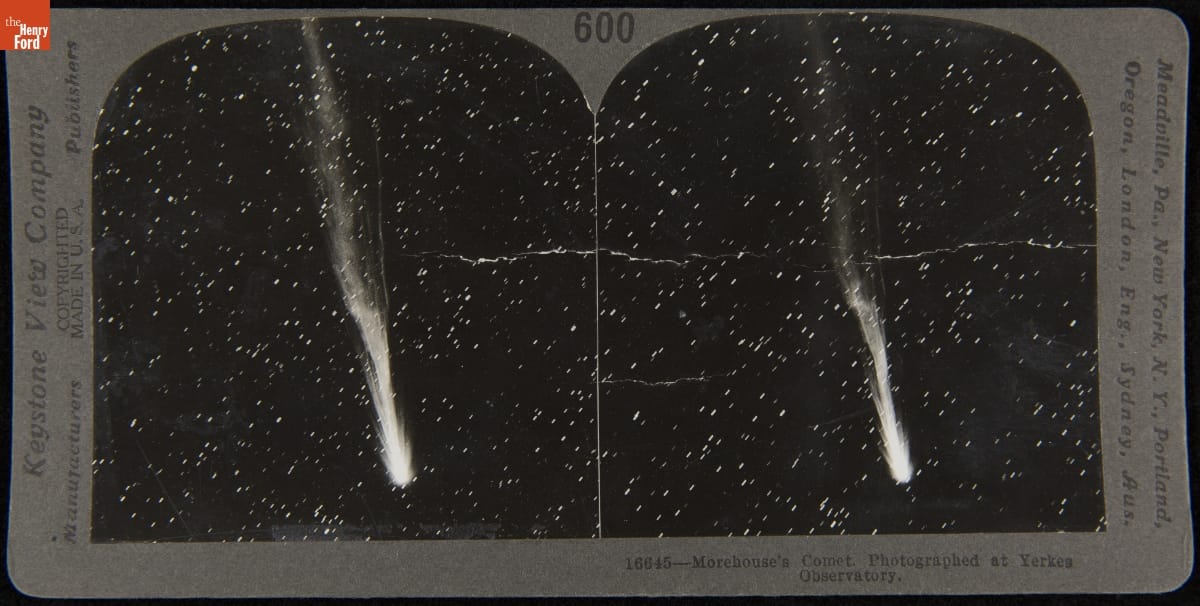
- November 16, 1908
- Collections - Artifact
Stereograph, "Morehouse's Comet," 1908
Americans loved stereographs -- millions were made from the mid-1800s through the 1930s. A stereograph consists of two offset photos that appear to have three-dimensional depth when viewed through a stereoscope. These images entertained and educated. Stereographs could transport viewers to distant events, exotic places, and even worlds beyond, like this image of a comet first seen in 1908 and named for astronomer Daniel Morehouse.
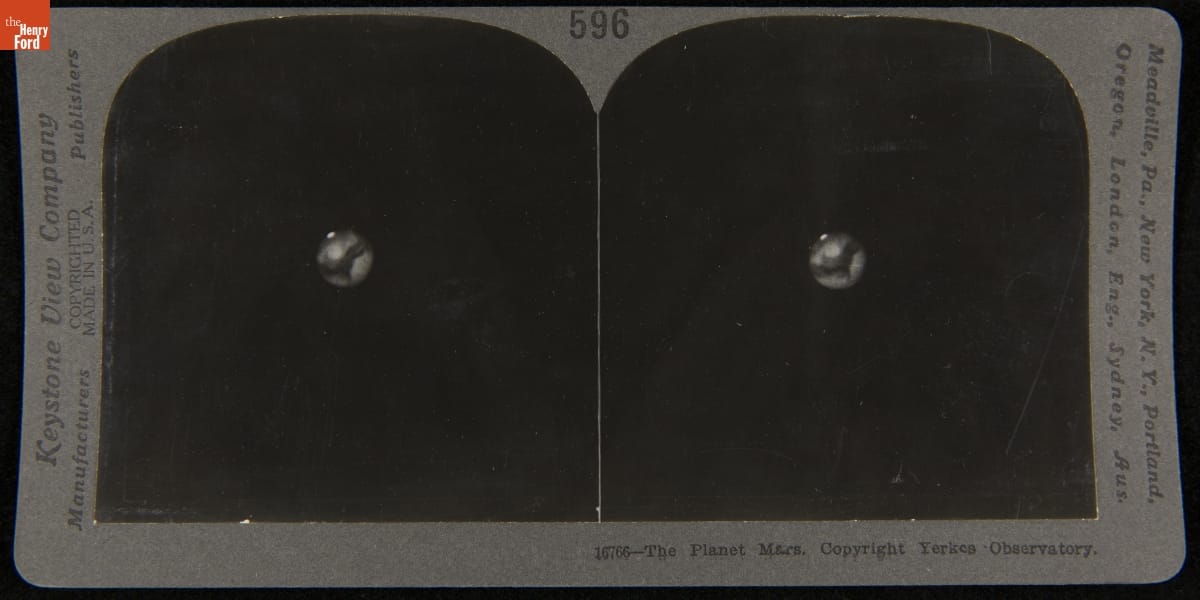
- Stereograph, "The Planet Mars," 1909 - Americans loved stereographs -- millions were made from the mid-1800s through the 1930s. A stereograph consists of two offset photos that appear to have three-dimensional depth when viewed through a stereoscope. These images entertained and educated. Stereographs could transport viewers to distant events, exotic places, and even worlds beyond, like this image of Mars taken through a 40-inch telescope at the Yerkes Observatory.
- September 28, 1909
- Collections - Artifact
Stereograph, "The Planet Mars," 1909
Americans loved stereographs -- millions were made from the mid-1800s through the 1930s. A stereograph consists of two offset photos that appear to have three-dimensional depth when viewed through a stereoscope. These images entertained and educated. Stereographs could transport viewers to distant events, exotic places, and even worlds beyond, like this image of Mars taken through a 40-inch telescope at the Yerkes Observatory.
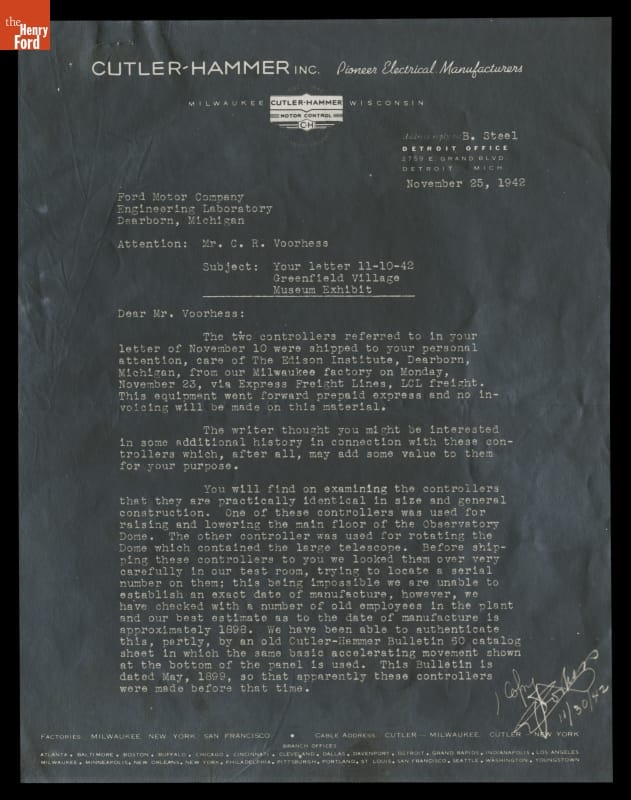
- Correspondence Regarding Donation of Yerkes Observatory Motor Controllers, 1942 - Yerkes Observatory in Williams Bay, Wisconsin is known as the birthplace of modern physics for the volume and importance of research conducted there. It is also home to the world's largest refracting telescope. When it opened in 1897, the observatory included an adjustable floor and rotating dome, governed by motor controllers made by Chicago-based Cutler-Hammer. The Henry Ford acquired the controllers from Cutler-Hammer in 1942.
- November 25, 1942
- Collections - Artifact
Correspondence Regarding Donation of Yerkes Observatory Motor Controllers, 1942
Yerkes Observatory in Williams Bay, Wisconsin is known as the birthplace of modern physics for the volume and importance of research conducted there. It is also home to the world's largest refracting telescope. When it opened in 1897, the observatory included an adjustable floor and rotating dome, governed by motor controllers made by Chicago-based Cutler-Hammer. The Henry Ford acquired the controllers from Cutler-Hammer in 1942.
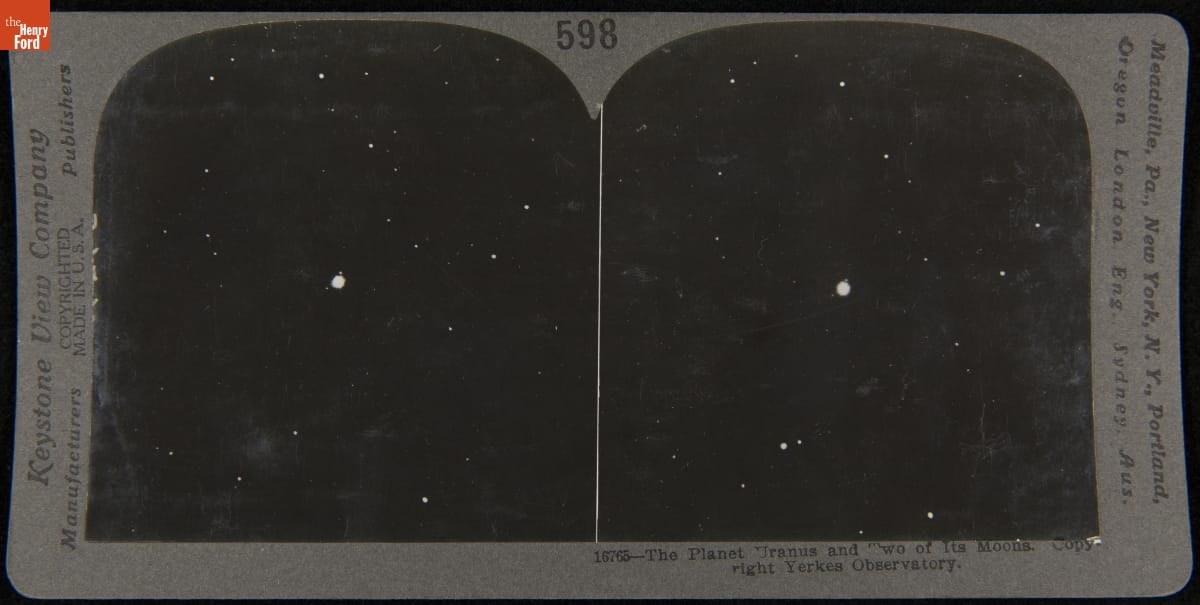
- Stereograph, "The Planet Uranus and Two of Its Moons," 1916 - Americans loved stereographs -- millions were made from the mid-1800s through the 1930s. A stereograph consists of two offset photos that appear to have three-dimensional depth when viewed through a stereoscope. These images entertained and educated. Stereographs could transport viewers to distant events, exotic places, and even worlds beyond, like this view of Uranus and two of its moons.
- 1916
- Collections - Artifact
Stereograph, "The Planet Uranus and Two of Its Moons," 1916
Americans loved stereographs -- millions were made from the mid-1800s through the 1930s. A stereograph consists of two offset photos that appear to have three-dimensional depth when viewed through a stereoscope. These images entertained and educated. Stereographs could transport viewers to distant events, exotic places, and even worlds beyond, like this view of Uranus and two of its moons.
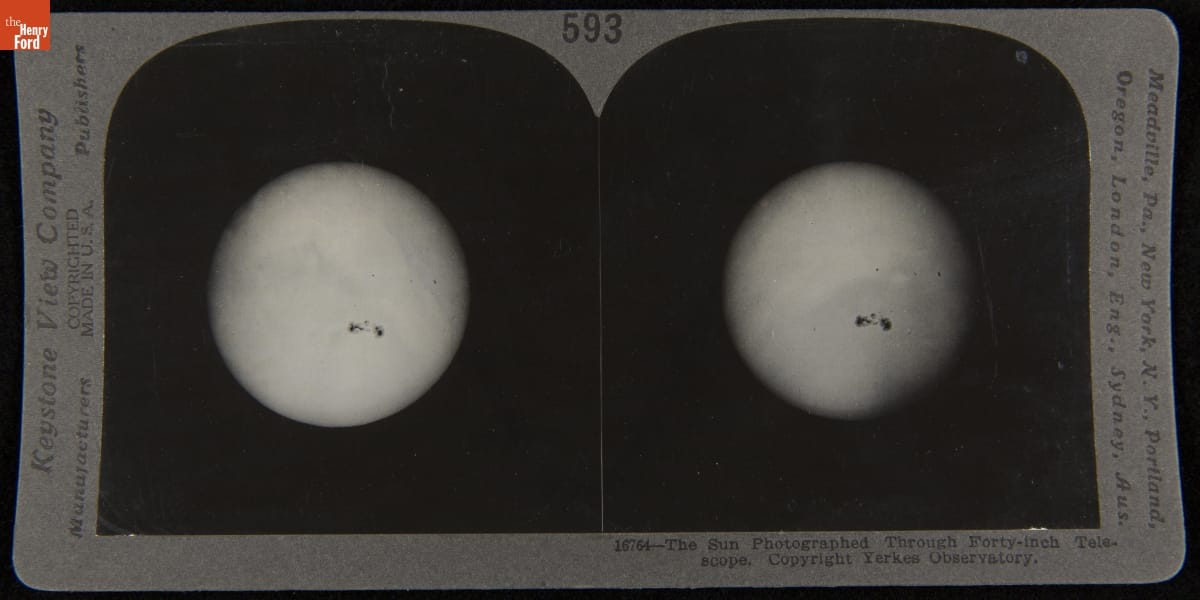
- Stereograph, "The Sun Photographed through Forty-Inch Telescope," circa 1917 - Americans loved stereographs -- millions were made from the mid-1800s through the 1930s. A stereograph consists of two offset photos that appear to have three-dimensional depth when viewed through a stereoscope. These images entertained and educated. Stereographs could transport viewers to distant events, exotic places, and even worlds beyond, like this image of our Sun taken through a 40-inch telescope at the Yerkes Observatory.
- circa 1917
- Collections - Artifact
Stereograph, "The Sun Photographed through Forty-Inch Telescope," circa 1917
Americans loved stereographs -- millions were made from the mid-1800s through the 1930s. A stereograph consists of two offset photos that appear to have three-dimensional depth when viewed through a stereoscope. These images entertained and educated. Stereographs could transport viewers to distant events, exotic places, and even worlds beyond, like this image of our Sun taken through a 40-inch telescope at the Yerkes Observatory.
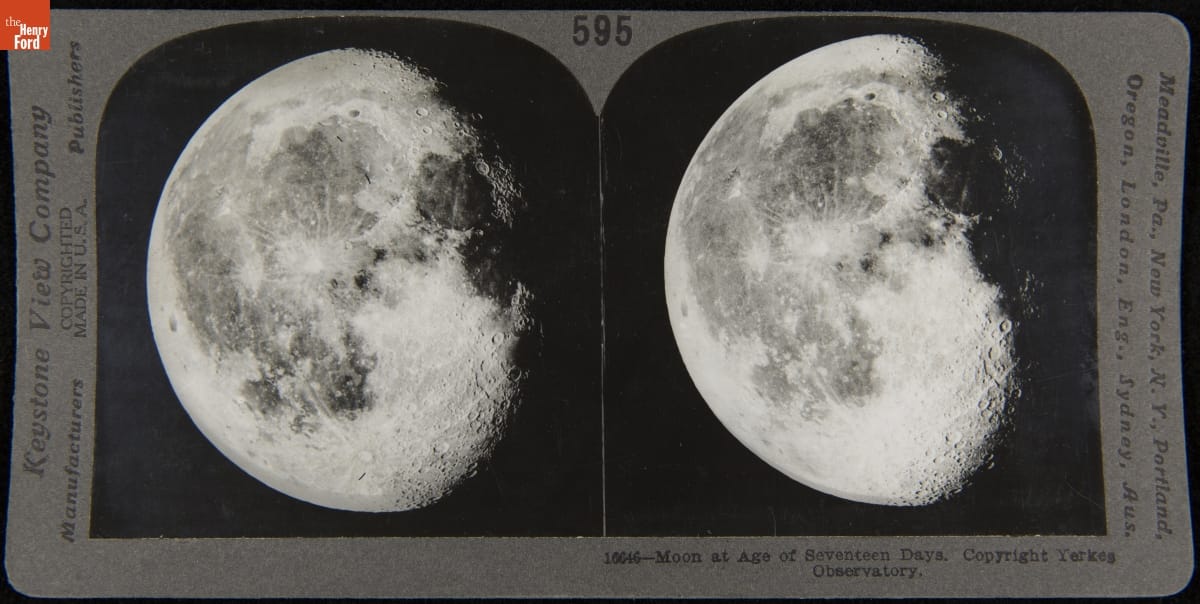
- Stereograph, "Moon at Age of Seventeen Days," 1904-1917 - Americans loved stereographs -- millions were made from the mid-1800s through the 1930s. A stereograph consists of two offset photos that appear to have three-dimensional depth when viewed through a stereoscope. These images entertained and educated. Stereographs could transport viewers to distant events, exotic places, and even worlds beyond, like this image of the Moon--Earth's only natural satellite.
- 1904-1917
- Collections - Artifact
Stereograph, "Moon at Age of Seventeen Days," 1904-1917
Americans loved stereographs -- millions were made from the mid-1800s through the 1930s. A stereograph consists of two offset photos that appear to have three-dimensional depth when viewed through a stereoscope. These images entertained and educated. Stereographs could transport viewers to distant events, exotic places, and even worlds beyond, like this image of the Moon--Earth's only natural satellite.
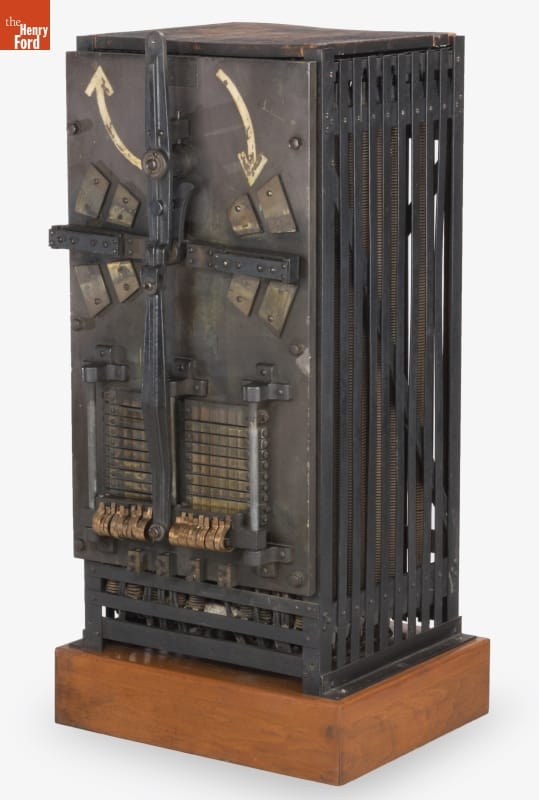
- Motor Controller Used at the Yerkes Observatory, Williams Bay, Wisconsin, circa 1897 - Yerkes Observatory in Williams Bay, Wisconsin is known as the birthplace of modern physics for the volume and importance of research conducted there. It is also home to the world's largest refracting telescope. When it opened in 1897, the observatory included an adjustable floor and a rotating dome, governed by motor controllers made by Chicago-based Cutler-Hammer Manufacturing Company.
- circa 1897
- Collections - Artifact
Motor Controller Used at the Yerkes Observatory, Williams Bay, Wisconsin, circa 1897
Yerkes Observatory in Williams Bay, Wisconsin is known as the birthplace of modern physics for the volume and importance of research conducted there. It is also home to the world's largest refracting telescope. When it opened in 1897, the observatory included an adjustable floor and a rotating dome, governed by motor controllers made by Chicago-based Cutler-Hammer Manufacturing Company.